


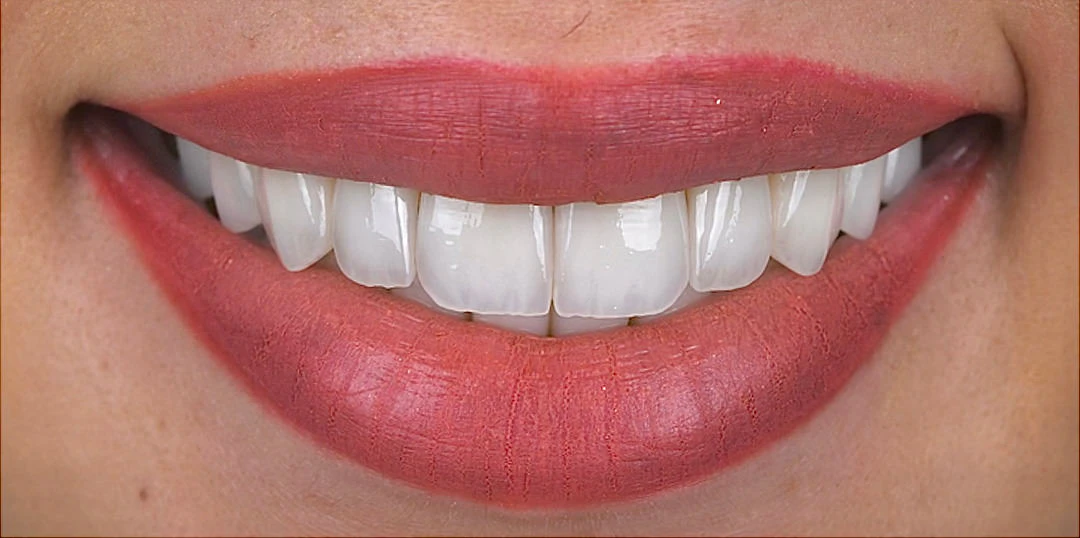
Porcelain veneers look the most natural of all veneer types because they replicate the way light passes through real tooth enamel. Among the available options, feldspathic porcelain and lithium disilicate (IPS e.max) consistently produce the most lifelike results, provided the case is designed and executed by an experienced cosmetic dentist or prosthodontist.
But material alone does not determine the outcome. Veneer thickness, margin placement, shade matching, and the skill of the dental laboratory technician all play equally important roles in whether the final result looks like a natural smile or an obvious cosmetic procedure. This guide explains exactly what makes veneers look natural, how each material performs, and what questions to ask before committing to treatment.
Understanding What Makes Teeth Look Natural
Before comparing veneer materials, it's essential to understand what gives natural teeth their distinctive appearance:
- Translucency: Natural teeth aren't opaque but allow some light to pass through, creating depth
- Color variation: Natural teeth display subtle color gradients rather than uniform coloration
- Surface texture: Real teeth have microscopic ridges and subtle imperfections
- Proportions: Natural-looking teeth follow specific width-to-length ratios and relate harmoniously to surrounding facial features
Porcelain Veneers
The Gold Standard for Natural Appearance
According to the American Academy of Cosmetic Dentistry, porcelain veneers are consistently rated as providing the most natural-looking results. Here's why:
1. Superior Translucency Properties
Porcelain veneers, particularly those made from advanced ceramics like lithium disilicate (e.g., IPS e.max), closely mimic the light-transmitting properties of natural tooth enamel. The carefully stratified layers of porcelain capture and reflect light in a way that mirrors natural tooth structure, delivering a vibrant, lifelike look patients will love.
2. Versatility for Customization
The best cosmetic dental laboratories use multiple porcelain layers and specialized staining techniques to reproduce the subtle color variations found in natural teeth. Modern porcelain veneers can be customized to match:
- Individual tooth morphology
- Translucency gradients from the gum line to the biting edge
- Age-appropriate characteristics
- Patient-specific color matching
3. Long-Term Color Stability
Studies have shown that porcelain veneers maintain their color and translucency significantly better than composite alternatives. Porcelain is highly resistant to staining and doesn't deteriorate over time, helping maintain that natural appearance for years.
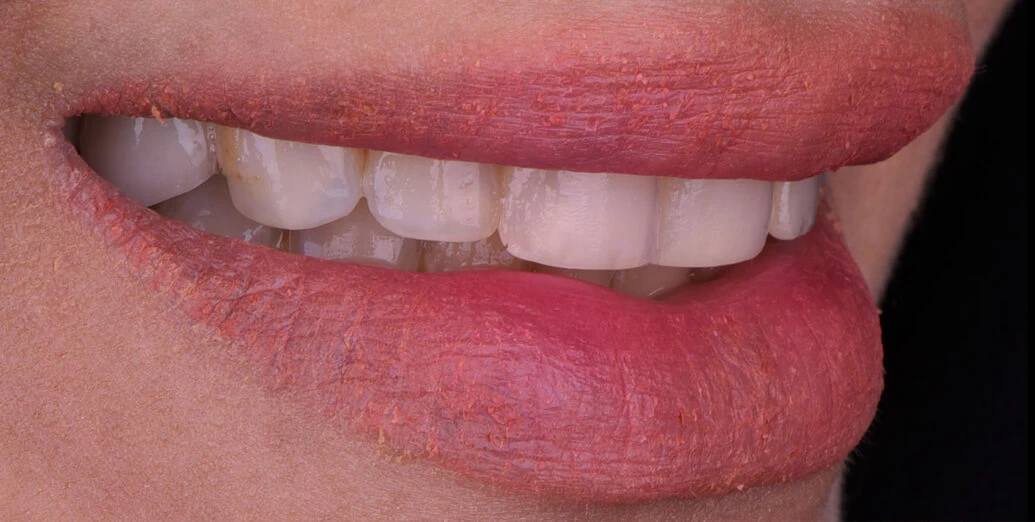
Before
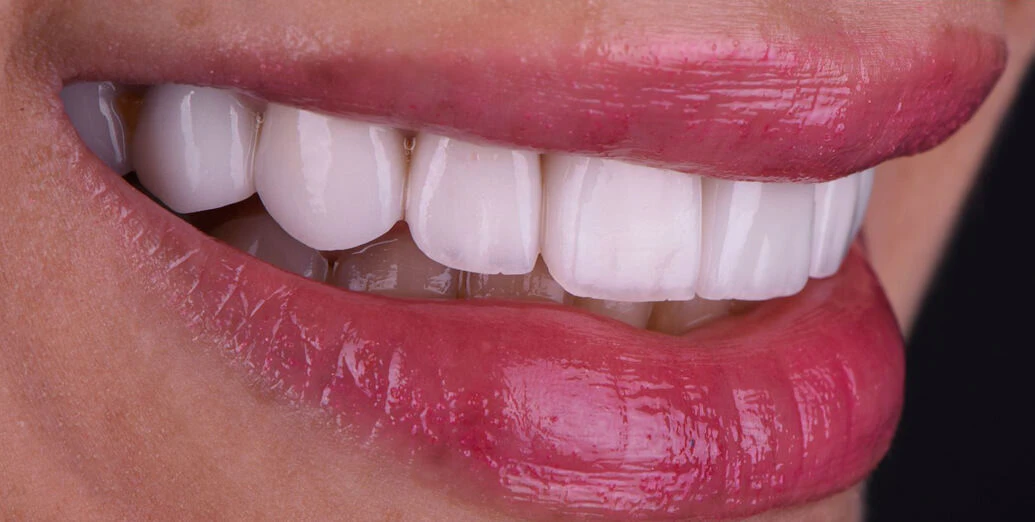
Veneers by Dr. Oussama Alaoui
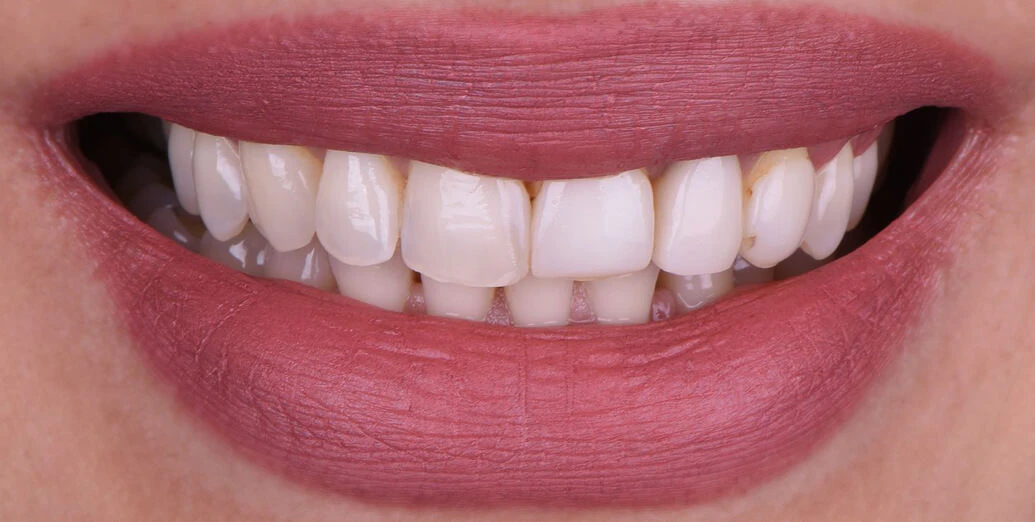
Before
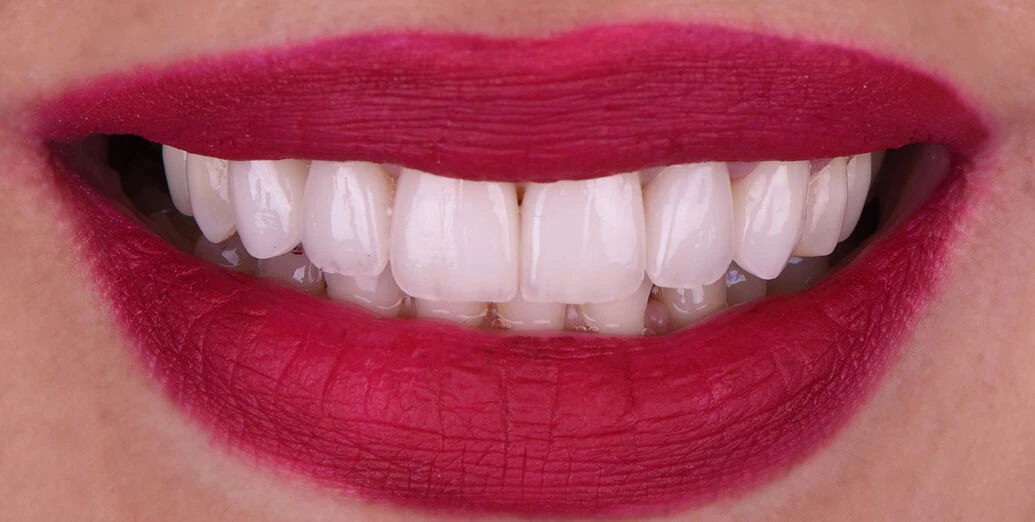
Veneers by Dr. Oussama Alaoui
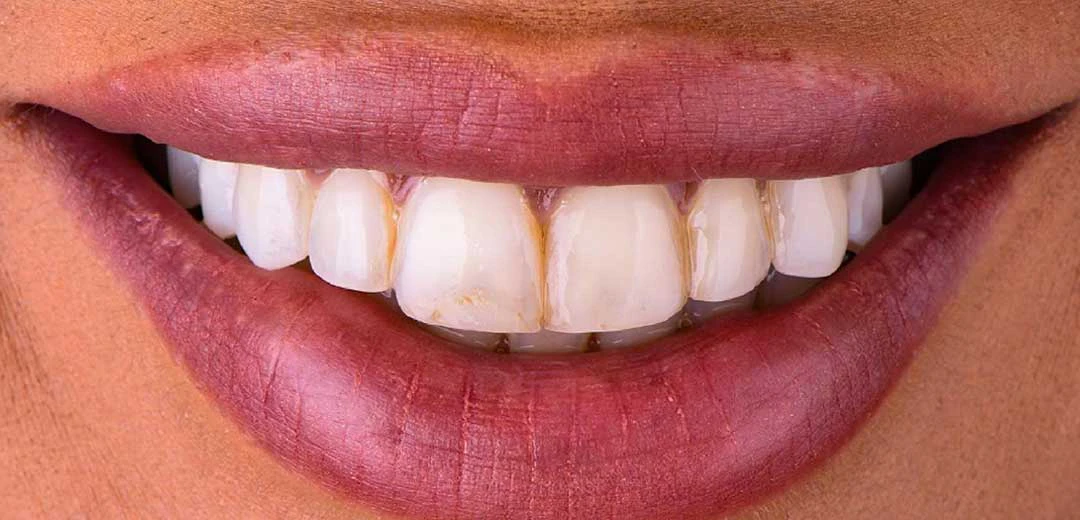
Before
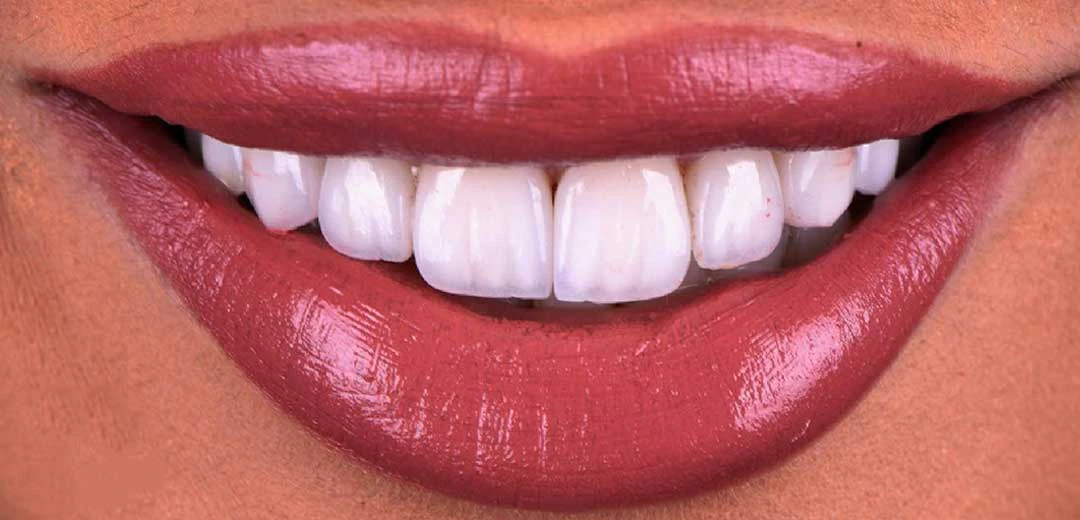
Veneers by Dr. Oussama Alaoui
Factors That Influence Natural Appearance Beyond Material
Veneer Thickness
Ultrathin veneers, typically 0.3-0.5mm, are favored for their natural appearance. This is because they require minimal tooth reduction, allowing the underlying tooth structure to enhance the final result. While ultrathin veneers are often ideal, every patient's needs are unique. Thicker veneers may be necessary in certain cases, and when expertly designed, can still achieve remarkably natural-looking outcomes.
Margin Placement
The edge where your veneer connects to your natural tooth is called the "margin." If not done right, this area can show an obvious line or ridge. According to dental research, the most natural-looking results come when this edge is placed slightly below your gum line. This creates a seamless transition that's nearly impossible to spot, making your veneers look like they're naturally part of your smile.
Expertise of the Dental Team
Perhaps most importantly, it’s important to note that the clinical expertise of the dentist and the skill of the laboratory technician are paramount in achieving natural-looking results, regardless of material.
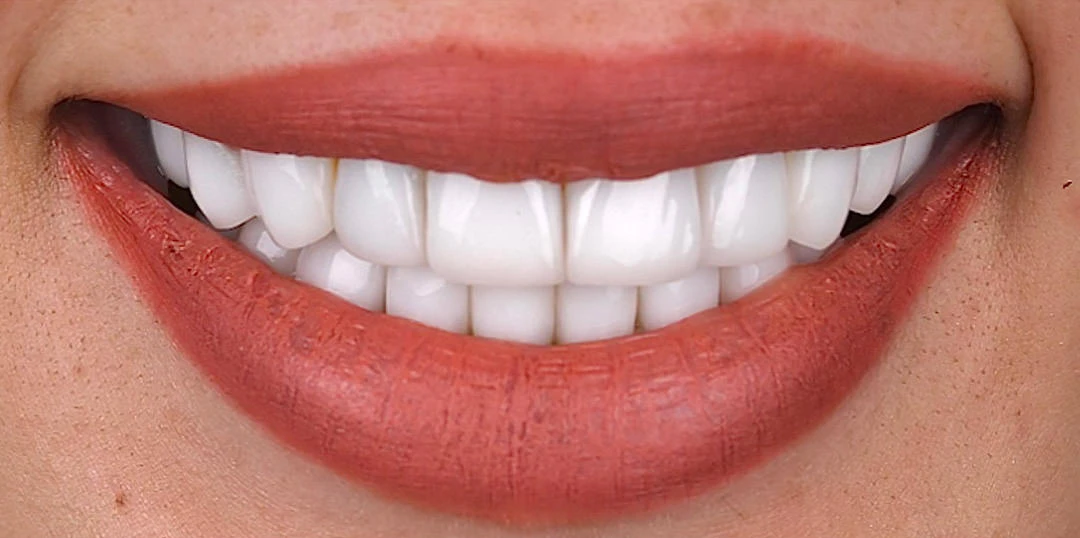
Before
Veneers by Dr. Roula Kilani
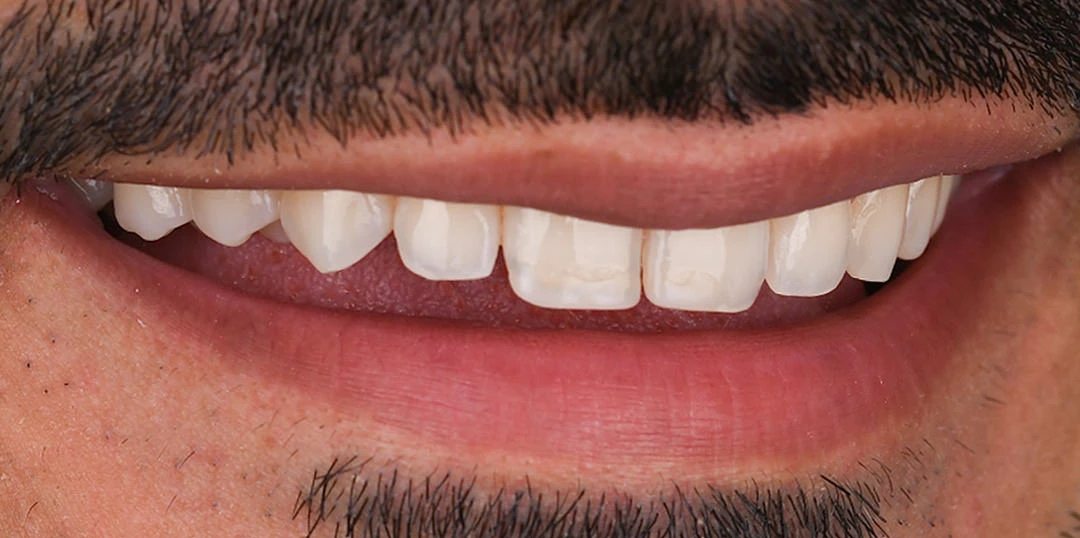
Before
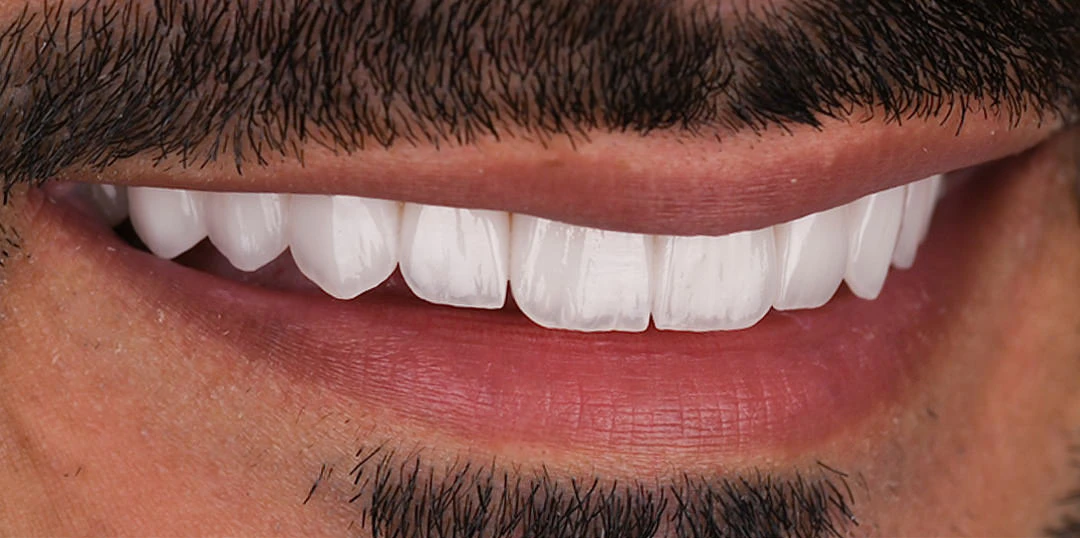
Veneers by Dr. Roula Kilani
Conclusion
The most natural-looking veneers result from a combination of advanced materials (primarily high-quality porcelain), customized design, and skilled craftsmanship. While porcelain veneers generally offer superior translucency, versatility, and longevity, the expertise of your cosmetic dentist remains the most critical factor in achieving a natural-looking smile enhancement.
At Harmony, we work with only the finest dental laboratories and use only state-of-the-art materials to ensure your veneers not only look natural today but continue to provide a beautiful, lifelike smile for many years to come.
If you’re looking for a highly experienced cosmetic dentist or prosthodontist, give us a call at 04 307 6510 (Dubai) or 800 333 444 (Abu Dhabi).
Frequently Asked Questions
Porcelain veneers look the most natural because dental porcelain replicates the light-transmitting properties of real tooth enamel. Feldspathic porcelain offers the highest translucency, while lithium disilicate (IPS e.max) provides an excellent balance of natural appearance and durability. Composite veneers can look good initially but become less natural-looking over time due to staining and wear.
High-quality porcelain veneers placed by an experienced cosmetic dentist or prosthodontist do not look fake. The key factors are material quality, correct shade characterisation across different zones of the tooth, appropriate thickness, precise margin placement, and gum health. Veneers that look fake are typically the result of poor design, incorrect shade selection, or excessive thickness rather than the material itself.
Porcelain veneers replicate the optical complexity of natural enamel more accurately, maintain their colour long-term, and last significantly longer. Composite veneers can look natural when freshly placed but absorb stains over time and typically need replacement within five to seven years. For the most natural long-term result, porcelain is the superior choice.
Feldspathic porcelain veneers can be made as thin as 0.2mm. Lithium disilicate veneers typically start at around 0.3mm. Ultrathin veneers allow the optical character of the underlying tooth to contribute to the final result, which enhances naturalness when the underlying tooth is a suitable colour. Where underlying discolouration needs covering, slightly thicker veneers with more internal opacity may be required.
Glazed porcelain veneers are highly resistant to staining and maintain their colour significantly better than composite alternatives. Composite veneers absorb pigments from coffee, tea, red wine, and tobacco progressively over time. With normal dietary habits and regular professional maintenance, porcelain veneers retain their appearance for ten to fifteen years or more.
A consultation with an experienced cosmetic dentist or prosthodontist is the only reliable way to determine this. The assessment should include an examination of your existing teeth, bite, and gum health, a discussion of your aesthetic goals, and ideally a digital smile design preview of the planned outcome before any treatment commitment is made.