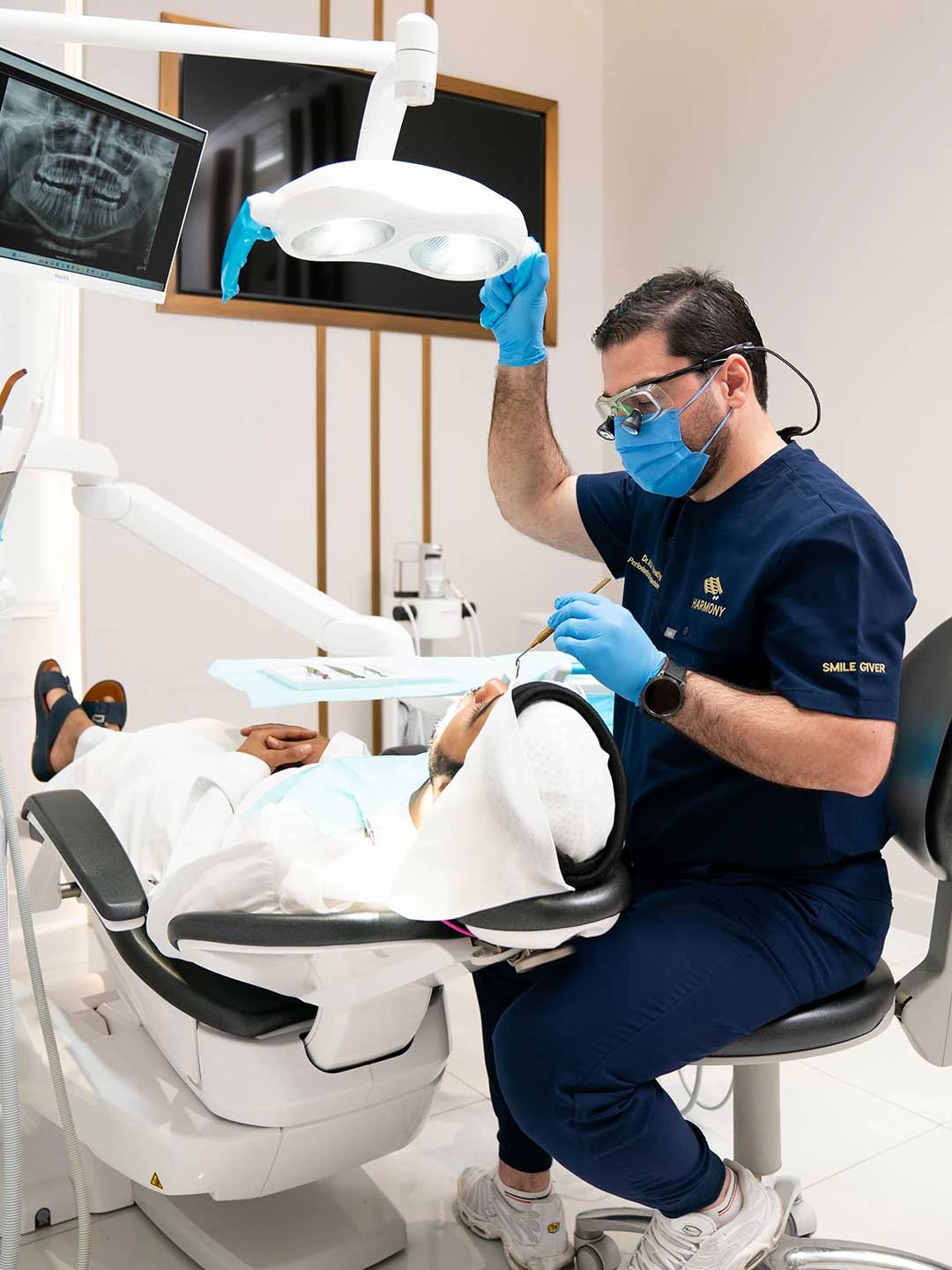
What Is a Periodontist?
A periodontist is a dental specialist who has completed three additional years of postgraduate training beyond dental school, specifically focused on the diagnosis and treatment of gum disease (periodontal disease), gum recession, bone loss around teeth and dental implants, and the surgical and non-surgical management of the structures that support the teeth, the gums, periodontal ligament and alveolar bone.
Periodontal disease is one of the most common, and most under-diagnosed, conditions in adults worldwide. In its early stage (gingivitis), it presents as bleeding, swollen or red gums. In its advanced form (periodontitis), it causes irreversible bone loss around the teeth and is one of the leading causes of adult tooth loss globally. Research has also linked untreated periodontal disease to systemic conditions including cardiovascular disease, diabetes and pre-term birth.
At Harmony Medical Centers in Jumeirah, Dubai, our specialist periodontists Dr. Samer Chakhachirou and Dr. Roula Kilani treat all stages of gum disease, from mild gingivitis and early periodontitis through to advanced cases requiring LANAP laser therapy, gum grafting and surgical intervention, as well as gum recession, peri-implantitis and cosmetic gum treatments.
A periodontist will also place and maintain dental implants, and treat peri-implantitis, the bacterial infection around implants that, if left untreated, leads to implant failure. Early intervention by a specialist is critical for both gum disease and implant complications.
- Periodontists complete 3 additional years of specialist training beyond dental school
- Gum disease affects an estimated 50% of adults globally, many without knowing it
- Gingivitis (early gum disease) is fully reversible with professional cleaning and improved hygiene
- Periodontitis (advanced gum disease) causes permanent bone loss but can be stabilised and controlled with specialist treatment
- LANAP laser therapy treats advanced gum disease with no scalpel, no stitches and minimal recovery time
- Untreated gum recession exposes tooth roots, causing sensitivity, decay risk and eventual tooth loss
- Peri-implantitis, bacterial infection around dental implants, requires early specialist intervention to preserve the implant
Why See a Periodontist Rather Than a General Dentist?
1
Specialist DiagnosisPeriodontists use specialist diagnostic tools, including full periodontal charting, bone level assessment and CBCT imaging, to accurately stage and classify your gum disease and design the appropriate treatment plan.
2
Advanced Non-Surgical TreatmentFor moderate gum disease, a periodontist performs comprehensive scaling and root planing under local anaesthesia, a far more thorough procedure than the routine cleaning available at a general dental visit.
3
LANAP Laser Gum TherapyLANAP, available at Harmony Jumeirah, is a clinically proven laser treatment for advanced periodontitis that removes diseased tissue while leaving healthy gum intact, with no stitches and minimal downtime. It is not available at most general dental clinics.
4
Gum Grafting & Recession SurgeryGum recession requires surgical intervention that is within the periodontist's specialist scope: connective tissue grafts, free gingival grafts and advanced soft tissue management techniques to restore the gumline.
5
Implant Placement & Peri-ImplantitisAs an implantologist as well as a periodontist, Dr. Samer Chakhachirou places dental implants and treats peri-implantitis, the infection around failing implants that requires specialist decontamination and regenerative treatment.
6
Long-Term Periodontal MaintenanceAfter active treatment, patients with a history of gum disease require specialist maintenance every 3 to 4 months, more frequent than standard dental visits, to prevent recurrence and monitor bone levels over time.